TL;DR
- Amazon Great Indian Festival 2026 starts on October 8.
- Flipkart Big Billion Days 2026 gives early access from October 8 and common access from October 9.
- Myntra Big Fashion Festival 2026 starts on October 8 and it is home to beauty, fashion and the style of life.
- India’s holiday online buying is extending beyond electronics to provisions, beauty, private care, fashion and daily categories.
- Tier-2 and Tier-3 cities, AI-assisted product enquiry and the faster fulfilment are an important part of this 2026 ecommerce story.
- For traders, the sale-day challenge continues after the order: inventory, picking, verification, documents, packing and forwarding all must keep moving.
The shopping season of the holidays in India is almost here, and 2026 is poised to be a bit distinct from the sale seasons that the buyer has become used to.
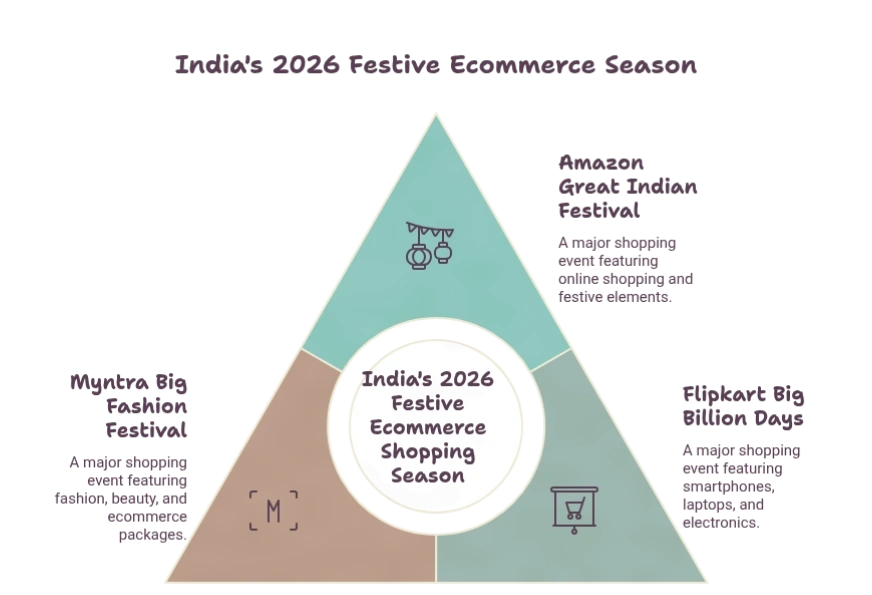
The known names come back: Flipkart Big Billion Days, Amazon Great Indian Festival and Myntra Big Fashion Festival. But the biggest story is not purely about how many discounts buyers will see on their monitors.
The way Indians shop online is moving.
People are buying more frequently, shopping from smaller cities, exploring categories beyond smartphones and television, using AI to research products, searching for faster delivery and more and more combining discounts with bank offers, exchange benefits and supple payment options.
At this time, traders are preparing for a very different challenge. A successful holiday sale can mean a sudden jump in orders, which puts pressure on inventory, picking, packaging, shipping and warehouse teams.
Here is what to expect from the main 2026 holiday sales and, more importantly, what this year’s shopping season says about the moving Indian e-commerce market.
2026 Calendar of Holiday Sales: Amazon, Flipkart and Myntra
These three big shopping events arrive in a very short window.
| Market | The event | 2026 plans |
|---|---|---|
| Amazon | Great Indian Festival | Starts on October 8 |
| Flipkart | Big Billion Days | Access opens early on October 8; bigger sale on October 9 |
| Myntra | Big Fashion Festival | Starts on October 8 |
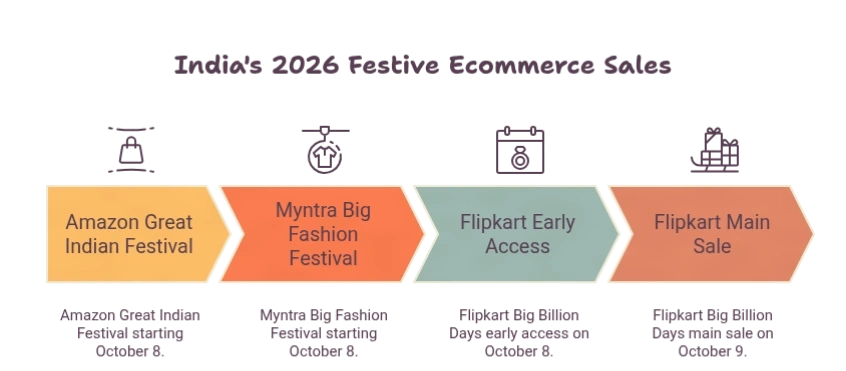
Amazon has confirmed officially that the Great Indian Festival 2026 starts on October 8, with early deals already available on Amazon.in.
Flipkart has advertised early access to Big Billion Days from October 8, followed by the bigger shopping event on October 9.
The latest Myntra Big Fashion Festival campaign also confirms that the fashion event goes live on October 8, with more than eight million styles promoted while the festival runs.
That close timing is good to watch. For buyers, it means a choice of important sale events will compete for attention almost simultaneously. For traders, it means the holiday haste can arrive very fast.
Shopping for the Holidays in 2026 Is Bigger Than Electronics
For years, holiday e-commerce in India has been strongly associated with smartphones, television, portables and big appliances.
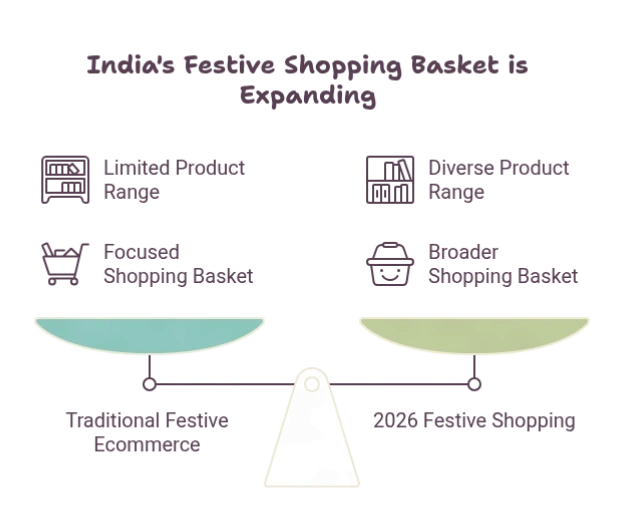
These categories are even now acutely important. But the shopping basket is getting wider.
Enquiry by Redseer estimates that the online retail market of India will cross $90 billion in 2026, with the market expected to grow by more or less 22–24% during the year. Redseer also expects online retail growth of around 25% for the 2026 holidays, with provisions, beauty, private care, fashion and other daily categories playing a bigger role.
The current holiday-season observations of Flipkart point in the same direction. The company has reported around 50% year-on-year growth in FMCG and almost 60% growth in beauty, while health, care for the new-born and fitness are also gaining attention, more exactly outside metropolitan markets.
That is an important shift.
A holiday sale is no longer only the time when somebody waits for the price of a smartphone or television to fall. More and more, it is becoming an occasion to buy clothes, beauty products, provisions, house products, personal care items and other things that a house needs anyway.
Premium Products Are Finding a Way to Sale Carts
Another interesting change is an increase in premium shopping.
A sale does not necessarily mean that consumers are only searching for the lowest-priced product available. Discounts, exchange offers, EMI options and bank promotions can make a pricier product feel realisable.
Amazon’s 2025 Great Indian Festival gives a good clue to this behaviour. Amazon has reported that smartphones priced above ₹30,000 grew 30% during the event, with 65% of that contribution coming from Tier-2 and Tier-3 cities. Premium clothing also grew strongly, while premium watches and other categories of high value saw augmented demand.
The same drift was visible in television. Amazon reported growth in bigger screen dimensions and more exactly strong growth in QLED and Mini-LED televisions during the 2025 holiday period.
So the question during a holiday sale is, more and more, not only:
“Which is this lowest-priced deal?”
Also, it can be this:
“What can I afford now that the global value has been raised?”
This issue matters to both buyers and brands.
Tier-2 and Tier-3 Cities Are Crucial to the Story of the Holidays
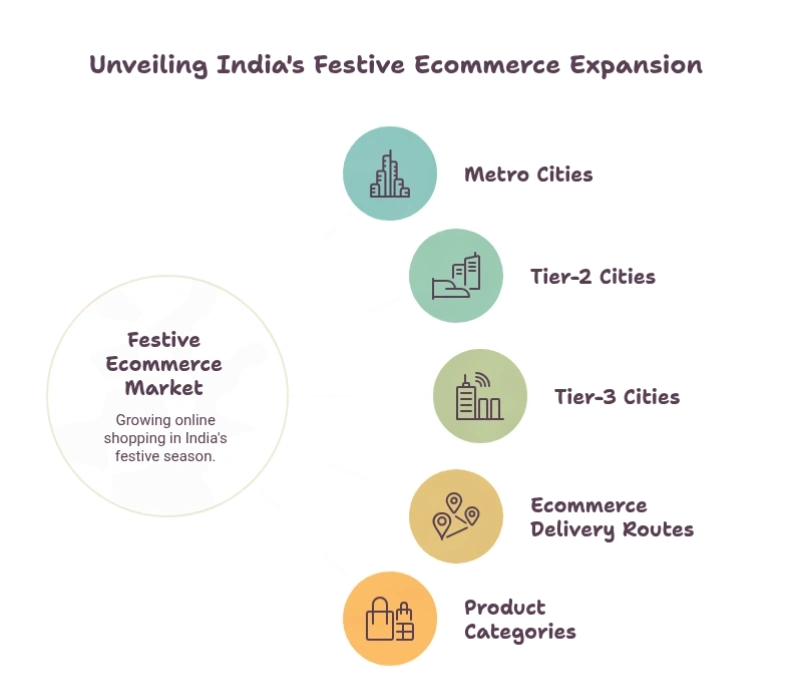
One of the biggest changes in Indian e-commerce is the increasing importance of consumers out of the bigger metropolitan cities.
Amazon has said that 70% of client visits while its 2025 Great Indian Festival was on came from Tier-2 and Tier-3 cities.
Flipkart has also brought out the importance of smaller cities and towns in its holiday business. The supply-chain expansion of the company for 2026 includes more than 900 new holiday delivery hubs, while 60% of its lately created holiday work opportunities are in last-mile delivery. Flipkart specifically has tied that expansion to the rising demand across Tier-2 and Tier-3 markets, as well as the growth of Flipkart Minutes.
This changes the picture of the typical holiday buyer online.
The holiday client is no longer concentrated in Mumbai, Delhi, Bengaluru, Hyderabad or other big metros. E-commerce has become a part of shopping conduct across a much wider part of India.
For traders, that creates a much bigger opportunity. Also it means that the availability of product, reliable delivery and a process of effective fulfilment count across a much wider geographic market.
AI Is Becoming Part of the Tour of Shopping
Maybe the most interesting new development in 2026 is happening even before the client reaches the checkout page.
AI is in the process of becoming a tool for shopping enquiry.
According to the 2026 holiday enquiry of Datum Intelligence, 51% of the online buyers measured had used AI chatbots to research an online purchase during the earlier three months, while 49% had used marketplace AI assistants. Comparison websites and price trackers were also commonly used during product enquiry.
This means the traditional shopping tour is in the process of moving.
Once it looked something like this:
Open the market → search the product → compare the price → buy
More and more, it can look like that:
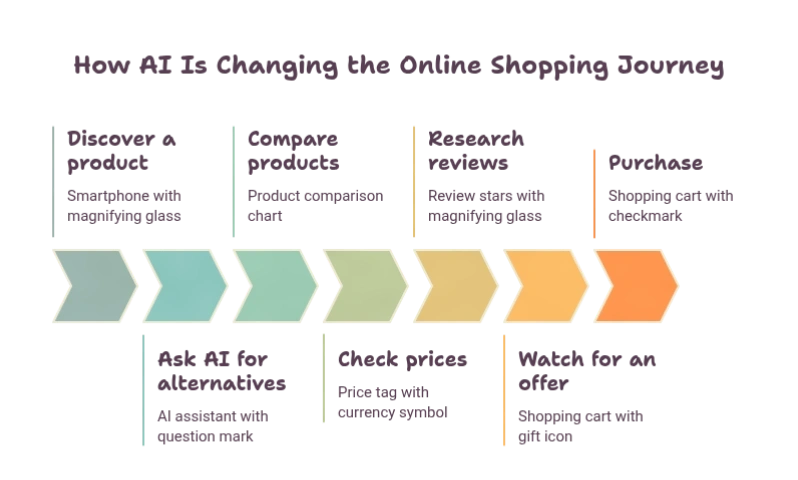
You see a product → ask AI about the alternatives → compare the products → check the price → research the reviews → watch for an offer → buy
Amazon is already bringing AI into this process. Its shopping experience includes tools like Rufus, which can help clients research products, compare options and make shopping decisions.
For buyers, that can make the process of enquiry easier.
For traders and brands, it means that the discovery of products is becoming more complicated. Winning a sale is not only about appearing in an enquiry outcome. Product information, reviews, price, availability and global value can all influence the decision.
Fast Delivery Is Elevating the Expectations of Customers
The season of holidays is also taking place at a time when the Indian consumer has become used to faster delivery.
Quick commerce is no longer confined to a small cluster of grocery shopping. It is becoming another layer of the online retail ecosystem of India.
Redseer’s 2026 online retail enquiry identifies quick commerce as one of the structural growth drivers of the market, rather than purely a temporary drift.
Amazon is also expanding Amazon Now, its faster delivery service, to more Indian cities. Amazon says the service is being expanded to more than 300 cities, reflecting this wider push to faster fulfilment.
Flipkart is making a similar investment with Flipkart Minutes. Its holiday-season expansion is accompanied by hundreds of new hubs and additional last-mile delivery capacity.
The outcome is a simple shift in the expectations of customers:
“When does my order arrive?” is becoming almost as important as “What does it cost?”
During an important sale, this expectation grows even stronger.
Flipkart Big Billion Days 2026: What to Expect
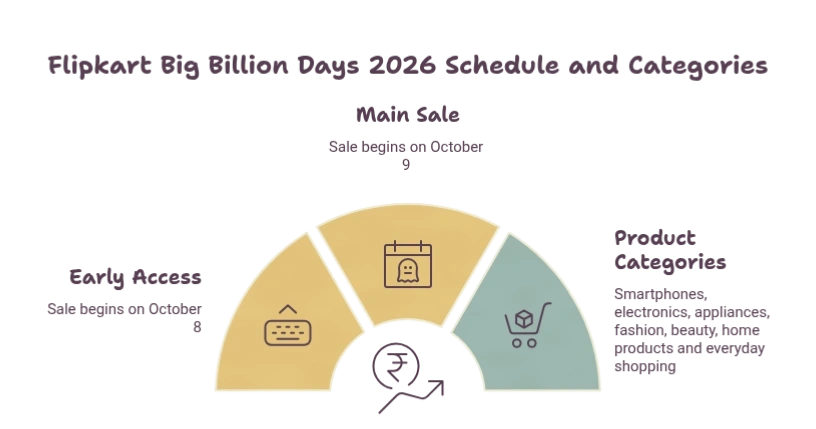
Flipkart Big Billion Days 2026 begins with early access on October 8, followed by the bigger sale on October 9. The event is being promoted through Flipkart’s new “Luck Badal Sakta Hai, Yahan Kuch Bhi Ho Sakta Hai” campaign.
As usual, that event covers a wide range of categories, including smartphones, electronics, domestic appliances, fashion, beauty, house products and daily shopping.
But BBD 2026 is arriving in a market where the buyer is no longer focused only on big-ticket electronics.
The current holiday observations of Flipkart display stronger demand in FMCG, beauty, health, private care and other daily categories. The company has also pointed to the increasing role of Gen Z, the influence of social media and D2C brands in categories like beauty and FMCG.
For buyers, this means BBD is probably going to feel more and more like an amply shared shopping festival rather than an electronics-only event.
For traders, it means to prepare for demand across a wider assortment.
Amazon Great Indian Festival 2026: What to Expect
The Amazon Great Indian Festival 2026 begins on October 8, and the early deals are already live.
Amazon is promoting offers through smartphones, electronics, fashion, beauty, house and kitchen, appliances, daily essentials and other categories. The company has also advertised an instant discount for eligible SBI card and EMI transactions, alongside additional benefits for Prime members.
One of the most interesting aspects of the event this year is the technology behind the shopping experience.
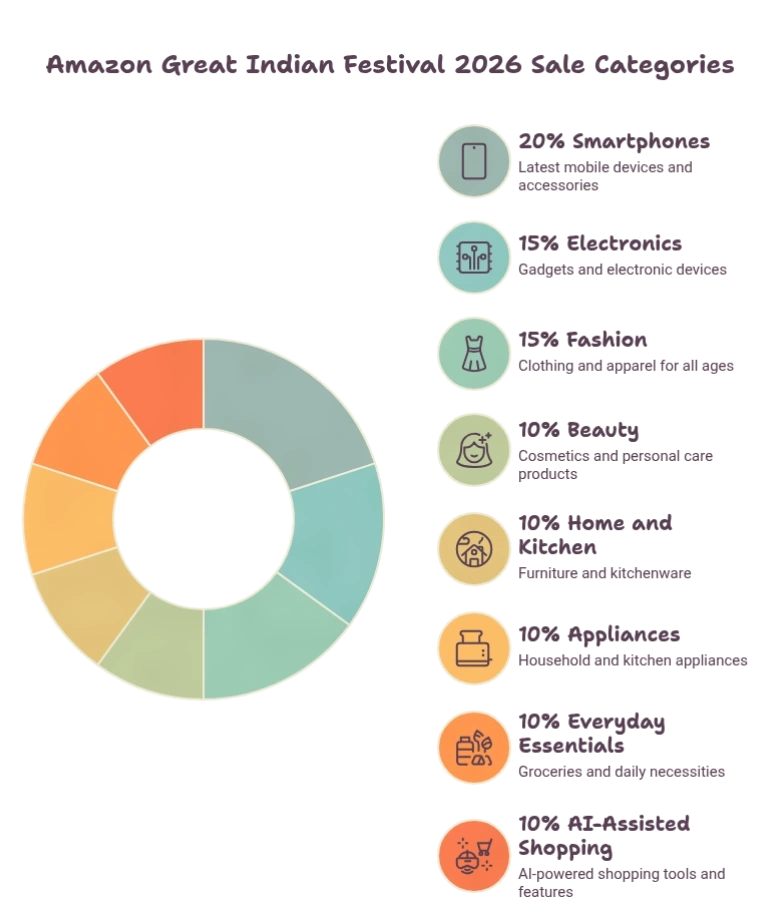
Amazon is in the process of putting a bigger accent on AI-assisted shopping, while also expanding its fulfilment infrastructure ahead of the holiday period.
Amazon India has lately announced its largest expansion of the operations network for the holiday season, including 20 new fulfilment centres, six new sort centres and 150 new last-mile delivery stations. The company says that the expansion will augment storage capacity by 50% to 64 million cubic feet.
This investment tells something about the scale of the season.
Behind every sale placard and discount information is a very large physical operation that involves inventory, warehouses, sorting, carriage and delivery.
Myntra Big Fashion Festival 2026: Fashion Takes the Pivotal Stage
While Amazon and Flipkart cover a wide range of categories, Myntra Big Fashion Festival has a different focus.
Fashion, shoes, beauty and lifestyle stay at the heart of the event.
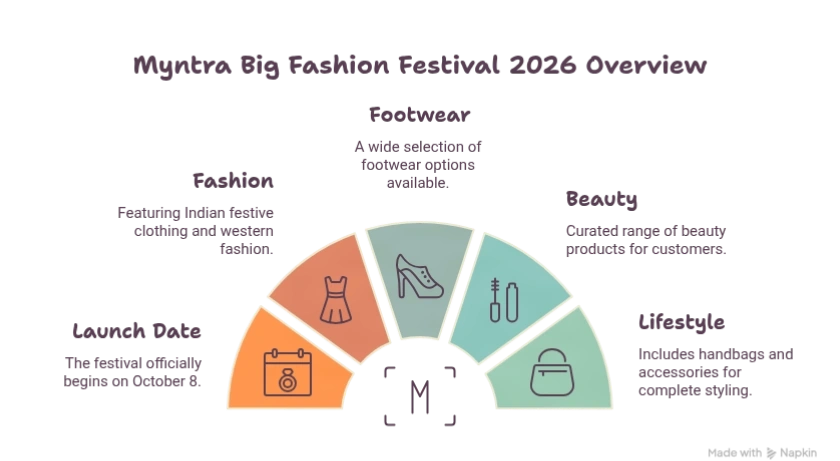
The Myntra 2026 BFF campaign features Alia Bhatt and Ranbir Kapoor and is planned to go live on October 8. The campaign is promoting more than eight million styles, standing out for the enormously broad range of fashion and lifestyle products available during the event.
This Myntra event’s meaning reaches beyond buyers of metropolitan fashion.
The 2025 BFF showed strong participation from non-metro markets, which shows that fashion e-commerce is more and more reaching clients well beyond the biggest cities of India.
This matters because fashion for the holidays is not confined to one type of client. Ethnic wear, wedding shopping, footwear, beauty, sportswear and daily fashion all become pertinent as the country moves to the holiday and wedding season.
Flipkart Against Amazon Against Myntra: What Are the Differences?
There is not any “best” sale for all. Every platform serves a slightly different shopping mission.
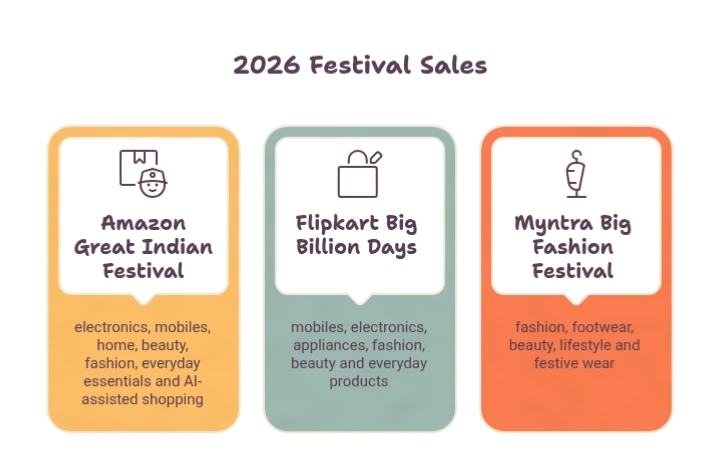
Flipkart Big Billion Days is a wide marketplace event that covers electronics, mobiles, domestic home appliances, fashion, beauty and daily categories.
Amazon Great Indian Festival combines a similarly wide product selection with a more and more technology-driven experience of shopping, including AI-assisted product discovery and a large fulfilment net.
Myntra Big Fashion Festival is much more focused on fashion, beauty and style of life, which makes it singularly pertinent for buyers preparing for the holiday and wedding season.
For many consumers, that reality will not be to choose only one.
Somebody can compare smartphones on Flipkart and Amazon, then move to Myntra for holiday apparel. Another buyer can buy provisions or house products during the same period while searching for fashion and beauty offers.
The 2026 holiday season is therefore less about one marketplace winning the entire shopping basket and more about the consumer who spreads shopping across distinct platforms.
How the Buyer Can Make Plans for the 2026 Sale Season
With the Amazon, Flipkart and Myntra sales arriving within days of one another, it can be tempting to begin to add products to wishlists and wait for the biggest discount to appear. A bit of planning can make the sale period much more helpful.
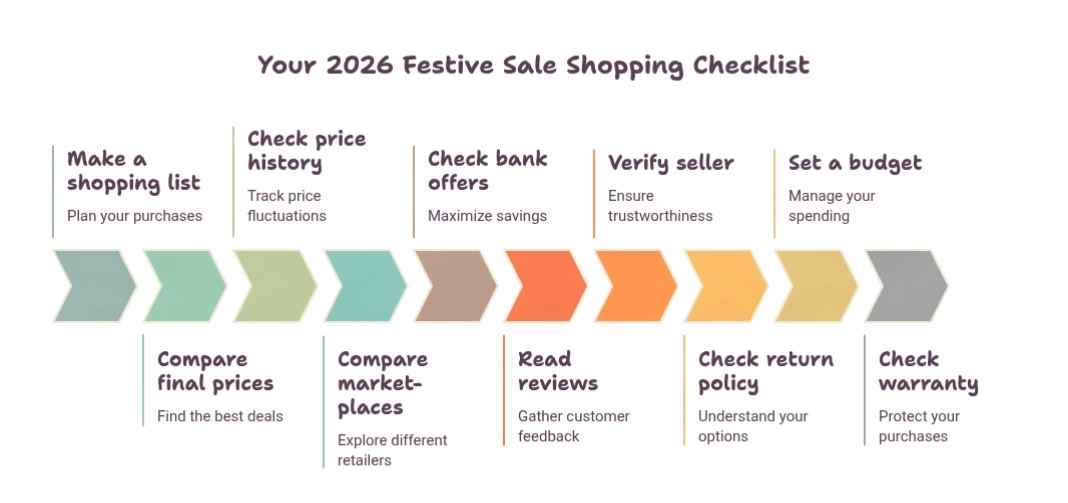
Make a first list before the sale begins
Begin with what you in fact need. Whether it is a smartphone, portable, house appliance, holiday clothes, shoes or daily essentials, write down the products you consider before the sale begins.
Compare this final price, not just the discount
Compare the real selling price and check discounts from the bank, EMI offers, exchange benefits, cashback, coupons, delivery charges and warranty details.
Add the important products to your wishlist early
If you already know what you want, add it to your wishlist or shopping list before the sale. This makes it easier to follow the price and availability as the sale begins.
Follow the price closely before the sale
Keep an eye on the price in the days until the sale, rather than judging the offer only by the MRP and the percent of discount shown on the sale page.
Decide where you want to buy
You do not necessarily need to buy all from one market. Compare the product, price, payment offer, delivery and return conditions that apply to the shopping you are doing.
Work with AI and tools of comparison for enquiry
AI assistants can help the buyer compare specifications, understand differences of product and narrow the choice. For pricey products, check the product details, reviews, warranty information and trader details before you buy.
Set a budget before the sale starts
Sales for the holidays can support impulse shopping. Setting a budget in advance can help you follow the foreseen purchases.
A simple way to classify the shopping:
- Necessity now — products already targeted for purchase.
- Helpful if discounted — products you want to buy if the price reaches your aim.
- Impulse — products you had not planned to buy but can acquire because of the sale.
Check the return, replacement and warranty policies
Before you buy, more exactly costly electronics, domestic appliances, fashion or beauty products, check the applicable return or replacement policy, warranty coverage and trader information.
Keep the payment offers ready
If you are planning an important purchase, check which form of payment gives the applicable offer before the sale begins. Discounts from the bank, EMI offers and cashback can change the effective shopping price.
A simple checklist on sale day
- Is this something I in fact planned to buy?
- Did I compare the final price?
- Is this trader reliable?
- Have I checked the reviews?
- Does the product come with the warranty that I need?
- Are there any restrictions on exchange or return?
- Is a bank or a payment offer applicable?
- Is the delivery date adapted to me?
- Am I staying within my budget?
What the 2026 Sale Season Means for Traders
For buyers, a sale is as a rule about finding a product at a better price.
For traders, the sale begins long before the client clicks “Buy Now.”
The first challenge is inventory.
Fast-moving SKUs can all of a sudden move much faster than they do on ordinary days. A product that usually sells 20 units a day can all of a sudden become one of the most frequently ordered items in the catalogue of a trader.
Then comes the operational chain:
Order received → picking → verification → bills and shipping documents → packing → forwarding
Every step has to keep moving.
If orders increase five times but the warehouse continues to process them one by one in only the same way, the additional demand can quickly result in an operational bottleneck.
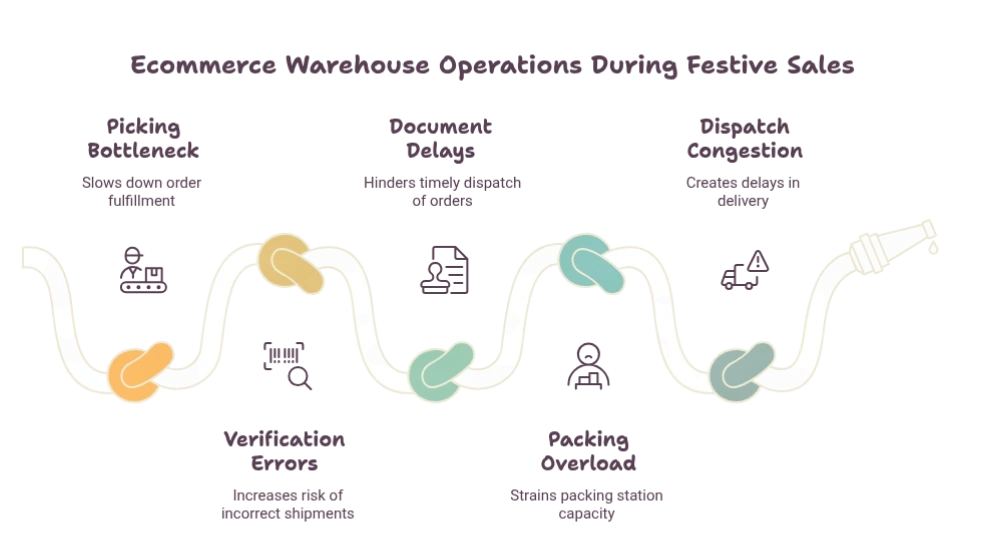
This is singularly important for traders managing multiple marketplaces.
A holiday shopping day can mean orders coming from Amazon, Flipkart and Myntra at the same time. Every market can have distinct order information, shipping requirements and processing timelines.
The challenge is not purely to generate sales any more.
It is processing these sales exactly and on time.
Why SKU-Wise Processing Matters More During the Sales
Think about a simple example.
A trader as a rule gets 200 orders a day.
During an important sale, the number increases to 1,000.
If the team processes all orders singly, the warehouse personnel can walk repeatedly to the same shelves to pick the same products.
In place of that, a trader can organise the workload around SKUs.
Assume that 100 of these orders contain the same black tee-shirt in size M.
In place of finding this product 100 separate times, the warehouse can identify this repeated SKU, pick the required quantity at once, check it and then continue with the packaging workflow.
The same principle can apply to other products of high volume.
This does not cancel the necessity to check individual orders. It purely organises the work in a way that can reduce repetition and superfluous motion.
During sale periods, these little operational improvements can make a meaningful difference.
How Traders Can Prepare for the 2026 Holiday Sales
Some practical preparations can make the sale period much easier to manage.
Closely check the fast-moving inventory
Identify the products that are probably going to get higher demand and adjust the stock so that it is visible before the sale begins.
Prepare the packing material early
Running low on boxes, mailers, tape, labels or other packaging supplies during a sale is a problem you can avoid.
Identify the high-volume SKUs
Look at past sales and current demand to determine which products are probably going to dominate the order volume.
Have the warehouse organised
Products that sell often need to be easy for the packing team to find.
Plan the printing of documents
Bills, shipping labels and other documents can become a meaningful part of the workload as the volume of orders increases.
Create a workflow of batch processing
Where the order volume makes it practical, regroup the work around repeated SKUs or lots, in place of treating every order as an entirely separate task.
Keep the dispatch deadlines visible
A large count of orders is helpful only if these orders can move through the fulfilment process on time.
Prepare a complementary workforce
The busiest part of a sale may not be acquiring the orders. It may be picking, packing and forwarding.
The Real Challenge of a Big Sale Begins Once the Order Arrives
The shopping season of the holidays is becoming faster, wider and more competitive.
The consumers have more choice than ever. They can research products with AI, compare offers, put bank offers to work, choose premium products, shop from smaller cities and more and more expect quick delivery.
For traders, this means preparation has to go beyond discounts and advertising.
The inventory has to be ready.
The warehouse must be organised.
High-volume SKUs must be easy to identify.
Orders must move through picking and verification effectively.
Bills and shipping documents have to be generated without creating a new bottleneck.
And the packing teams need a process that can manage the sudden increase in workload.
This is where architected order-processing workflows become more exactly valuable. Programs like HappySellers can help traders bring marketplace orders into a more organised processing workflow, making it easier to work with lots, SKUs and shipping documents in place of relying entirely on repetitive manual processing.
The 2026 Season of Holidays Is About More Than Discounts
The biggest story of the 2026 holiday shopping season in India may not be the dimension of any individual discount.
It is the way shopping itself is moving.
Online retail is moving beyond smartphones and television. Tier-2 and Tier-3 cities are playing a bigger role. Premium products are finding more buyers. Fashion, beauty, provisions and daily categories are becoming more important. AI is getting into product enquiry. Quick commerce is elevating expectations around the speed of delivery.
And behind all of that, traders are in the process of handling more and more complex order volumes.
The upcoming Amazon Great Indian Festival, Flipkart Big Billion Days and Myntra Big Fashion Festival will be some of the biggest shopping events of the year. But for buyers, the experience begins before the sale opens and, for traders, the work continues long after the client has placed the order.
That is maybe the biggest change in the e-commerce of the holidays in 2026:
The sale is not only a moment any more when prices drop. It has become a complete ecosystem of shopping and fulfilment.
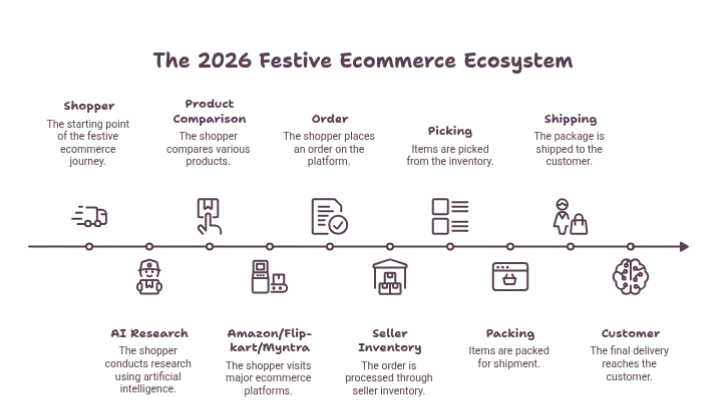
Frequently Asked Questions
When does the Great Indian Festival 2026 from Amazon begin?
Amazon has advertised that the Great Indian Festival 2026 begins on 8 October 2026.
When does Flipkart Big Billion Days 2026 start?
Flipkart has advertised early access from 8 October 2026, with common access for the public beginning on 9 October 2026.
When does the Myntra Big Fashion Festival 2026 kick off?
According to the article, Myntra Big Fashion Festival 2026 goes live on 8 October 2026.
Which categories are important during the 2026 sales for the holidays?
Electronics are important, but the article also brings in fashion, beauty, provisions, FMCG, private care, products for the home, health, fitness and other daily categories.
How should a buyer prepare for these 2026 sales?
Make a shop list, compare the final price, check prices before the sale, revise payment offers, check trader and warranty details, and set a budget before you buy.
Why do the sales of the holidays create operational pressure for traders?
A higher order volume can put pressure on inventory, picking, verification, bills and shipping documents, packing and forwarding, more exactly for traders who handle multiple markets.
What does SKU-wise processing stand for?
SKU-wise processing organizes the warehouse work around repeated products. For example, if many orders contain the same SKU, a team can identify and pick the required quantity together for checking and then continue with packing at the order level.
Resources
- Amazon India — Great Indian Festival 2026 dates and operations for the holidays
- Amazon India — Great Indian Festival 2026 early market deals and shopping powered by AI
- Flipkart — information on the Big Billion Days 2026 sales
- Flipkart Stories — holiday announcements from 2026 and expansion of the supply chain
- Redseer Strategy Consultants — Online Retail Sales in India 2026
- Myntra — official platform for shopping
Sale dates and market figures can move as the platforms release new information. Check the official source before publishing time-sensitive statements or enhancing the article.